
The Mountain of Golden Earth
A folktale from Kampong Chhnang Province
A story handed down in Kampong Chhnang Province about how the region's pottery began.
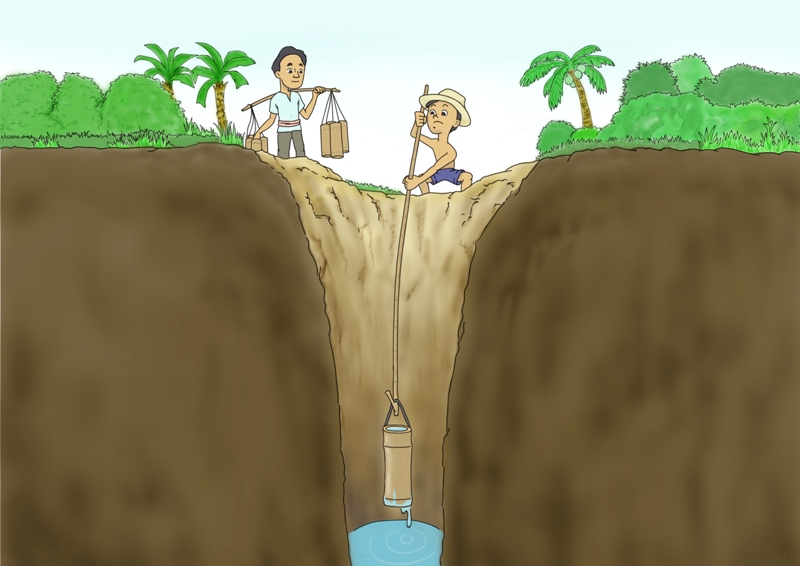
Long ago, at the foot of a mountain, there was a poor village that had water only in the rainy season. The land was no good for farming, so when the dry season came, the people dug deep wells and drew up water with bamboo tubes. That is why, it is said, the village came to be called by a name meaning "well" and "bamboo."
Seeing how hard the villagers lived, a god decided to lend them a hand in secret.
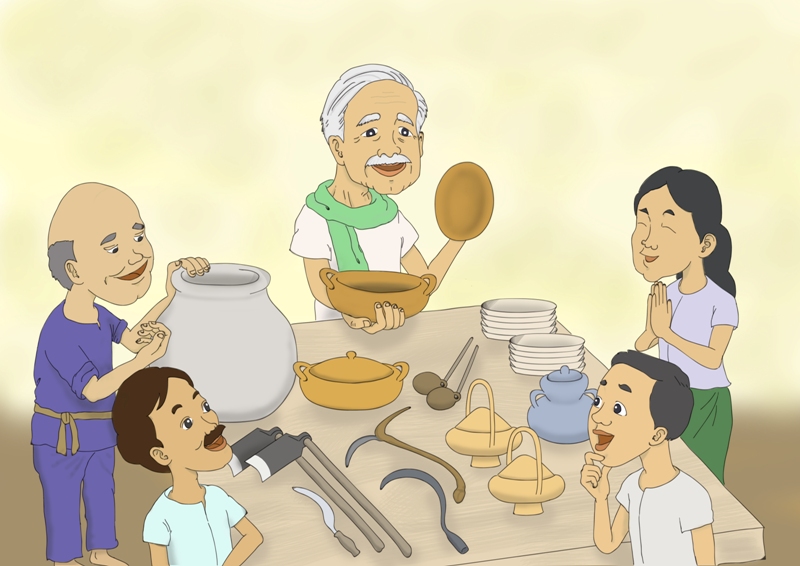
Taking the form of an old man, the god appeared in the village. With his mysterious power he made pots, plates and water jars one after another and handed them out to the villagers. Thanks to him, life in the village quickly became richer.
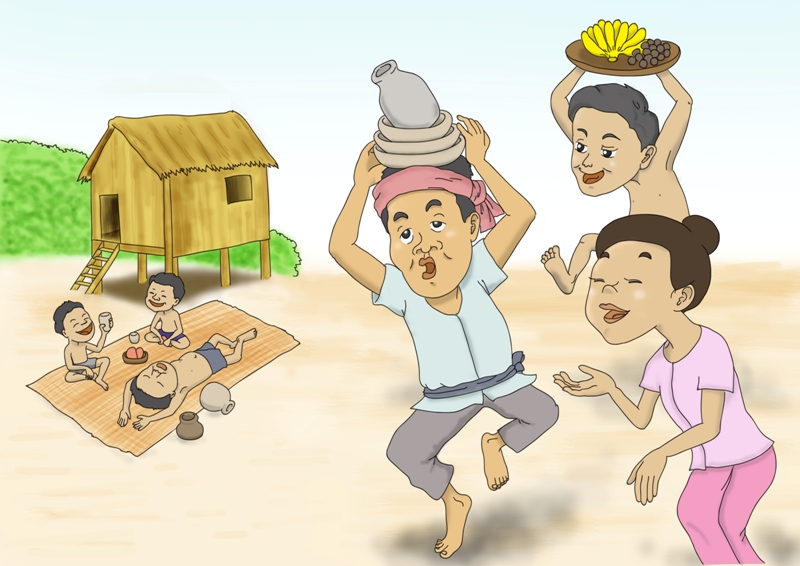
But as life grew easier, the villagers stopped working. At every festival they received dishes from the old man, used them carelessly and soon broke them.
Realizing this would do the villagers no good, one day the old man shut tight the door of the storehouse where the tools were kept.
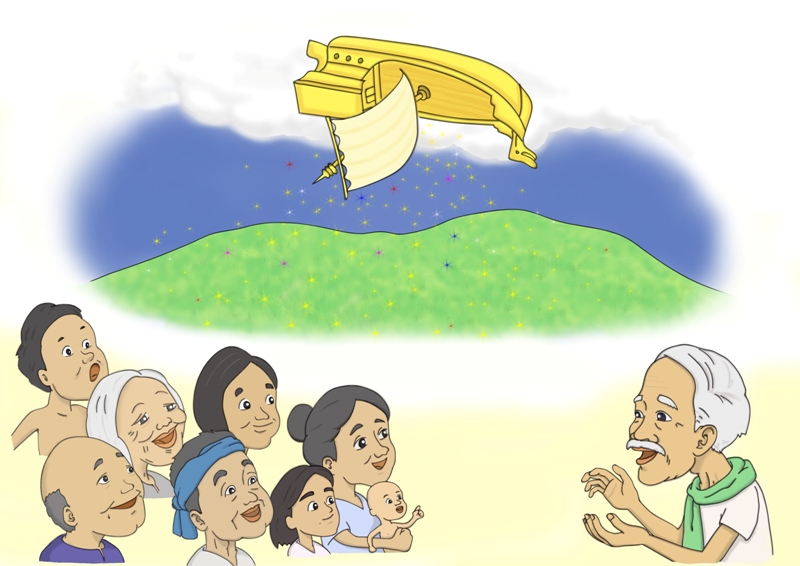
Then the old man gathered the villagers and told them: "Gold, silver and other treasures that once spilled from the heavens lie sleeping in this mountain. If you want them, dig them out with your own hands."
Half in doubt, the villagers went into the mountain and dug the earth. Then they kneaded the clay into whatever shapes they liked, formed it into pots and water jars, and fired them. The finished vessels shone as beautifully as gold.
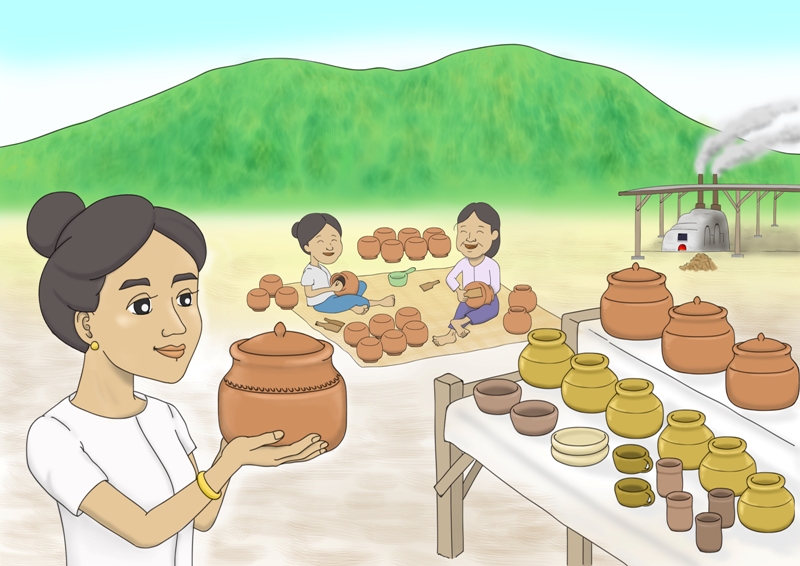
Word of the beautiful pottery spread, and people began coming from far away to buy it. And so the village grew prosperous through its pottery. The people named the mountain "the Mountain of Golden Earth," built a shrine as a sign of their gratitude, and still worship there to this day.
The end.
About this story
Kampong Chhnang Province is still known as one of Cambodia's leading pottery regions. This folktale tells the origin of the pottery-making that local people hold dear, and we turned it into a picture book together with NyoNyum, an information magazine based in Phnom Penh.
Its lesson, that people cannot truly prosper by relying on what is handed to them without working, offers real food for thought on how aid should be given.